



Public speaking
Building internal strength on your conferences and knowledge sharing sessions
“45 minutes of your presentation on Testing Strategies helped us better than 6 hours of dedicated workshops with an external consultant for 15 developers.”
Outcomes for your audience
Clear mental models for architecture and testing decisions
Language to defend good engineering in front of product and management
Concrete patterns attendees can bring back to their codebase and roadmap
The problem with teams is not the lack of DDD. The problem is making strategic decisions before we realize they are strategic.
Moment when everyday engineering decisions quietly turn into architecture — and how teams can stop guessing before it’s too late
There are many ways to integrate systems - choose wisely
Options have their strengths and drawbacks. Remembering all options is not a must - yet understanding architectural drivers is vital.
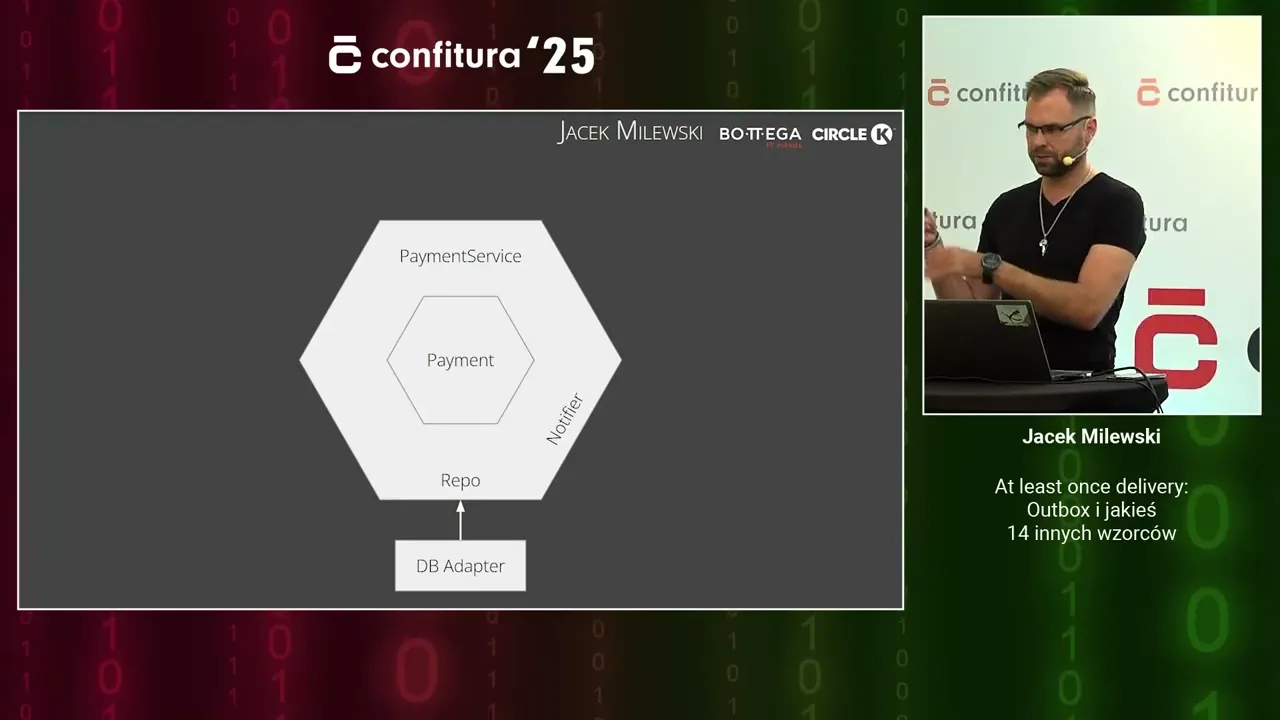
Avoid desynchronization problems leading to data inconsistency
Data and system communication is the key in modern distributed architectures. The same time it is one of the most complex and misunderstood aspect.
Real‑world refactoring of legacy monoliths into safer, well‑designed systems
There are many ways to approach legacy codebases, often times a complete rewrite is too expensive compared to nimble alternatives
Modern shift‑left testing for Domain Driven Design services for distributed systems
Traditional code testing strategies do not scale fast enough to follow modern architecture and business practices. Upskilling is necessary to understand how to remove bottlenecks at testing phase while keeping highest quality.
Let independent teams move fast without breaking each other
Modern distributed architectures come with modern testing approaches. Secure API-First development has its own set of toolset
Does your unit tests have a single reason to fail, and is it a business logic?
There are many approaches to design and develop automated unit and integration tests. Each system might require a different approach. As a result - there is a whole bunch of materials on it, but still is it enough? Probably not.
A real life cat and mouse game with hackers for developers
Observability and thorough analysis proved to be a key investment in protecting customer data from exposure - a case study
Style and format
Pragmatic, code‑level talks: less theory, more trade‑offs and real examples
Designed for conferences, meetups, and internal tech days (45–90 minutes)
Q&A and follow‑up materials so teams can continue the work after the talk
For organizers
Target audience: mid/senior/principal developers and architects
Experience: conference and meetup talks, commercial trainings, and on‑site workshops
Tech focus: JVM / Java, microservices, DDD, event‑driven systems, testing strategy